
Your Fish Health
Join the Yorkshire Koi Society for Better Fish Care
It is important to ensure the fish are health and that the water is of a good quality
Maintaining koi health is a balance of water chemistry, observation, and stress management. Since koi live in a closed ecosystem, their health is almost entirely dependent on the quality of their environment
1. The Foundation: Water Parameters
Poor water quality is the “silent killer” and the root cause of most koi diseases. If your koi look sick, test your water first.
| Parameter | Ideal Range | Why it Matters |
| Ammonia | 0 ppm | Highly toxic; causes gill damage and “burns.” |
| Nitrite | 0 ppm | Prevents blood from carrying oxygen (Brown Blood Disease). |
| Nitrate | < 25 ppm | High levels cause long-term stress and algae blooms. |
| pH | 7.5 – 8.5 | Needs to be stable; sudden “crashes” can be fatal. |
| KH (Hardness) | 100 – 200 ppm | Acts as a buffer to prevent pH swings. |
| Oxygen | > 6.0 mg/L | Essential for breathing; lower in summer/warm water. |
2. Recognizing a Healthy vs. Sick Koi
Daily observation during feeding is your best diagnostic tool.
Signs of a Healthy Koi
Appetite: Eagerly comes to the surface to eat.
Posture: Fins are held away from the body (not “clamped”).
Skin: Colours are vibrant; slime coat is thin and clear.
Behavior: Active swimming; socializes with other fish.
Early Warning Signs of Illness
Flashing: Rubbing or scratching against pond walls/floor (indicates parasites)
Clamped Fins: Holding fins tight against the body (indicates stress or pain)
Isolating: Sitting alone near the bottom or water return.
Gasping: Hanging at the surface or waterfall (indicates low oxygen or gill flukes).
Pineconing: Scales sticking out (a sign of Dropsy, which is often fatal).
3. Common Ailments & Treatments
If you suspect an issue, identify the symptoms before medicating.
Parasites (Ich, Flukes, Costia): Usually marked by white spots (like salt) or “flashing.
Treatment: Salt baths ($0.3\%$ to $0.6\%$ concentration) or proprietary treatments like Formalin/Malachite Green.
Bacterial Infections (Ulcers, Fin Rot): Open sores or ragged, red-edged fins.
Treatment: Improve water quality first. Use antibacterial pond treatments or topical antiseptics for large ulcers.
Fungus (Saprolegnia): Appears as white, “cotton-wool” tufts on the skin.
Treatment: Antifungal medications and removing decaying organic matter from the pond.
Sap-leg (Carp Pox): Smooth, waxy white bumps.
Note: This is viral and generally harmless; it often clears up on its own as water warms.
4. Proactive Health Tips
Quarantine: Never add new fish directly to your pond. Keep them in a separate tank for 2–4 weeks to monitor for disease.
Don’t Overfeed: Uneaten food rots and spikes ammonia. Only feed what they can eat in 3–5 minutes.
Aeration: Always run an air pump or waterfall, especially during hot summer nights when oxygen levels naturally drop.
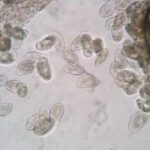
This is a Gill Fluke one of the many parasites that can effect the fish. watch for them jumping, flicking. rubbing against things as these can be a sign something is wrong
parasite information
Important Medical & Legal Disclaimer
While we can provide information on general husbandry and common practices in the koi-keeping hobby, we are, not a veterinarian or a certified aquatic specialist.
Before administering any treatment to your pond or fish, please keep the following in mind:
Consult a Professional: If you have a high-value collection or a fish in severe distress, contact a Certified Aquatic Veterinarian or a professional pond consultant.
Water Quality First: Approximately 90% of koi health issues are caused by poor water parameters. Always test your water before adding chemicals; adding medication to a pond with high ammonia or low oxygen can be fatal to the fish.
Read the Labels: Dosages vary wildly between brands and concentrations. Always calculate your exact pond volume before dosing. Overdosing can kill your fish, and underdosing can create drug-resistant parasites.
Species Sensitivity: Some treatments (like copper or certain algaecides) are toxic to invertebrates, plants, or specific fish species (like Orfe or Sturgeon) that may share the pond with your koi.
Safety Gear: Some medications, such as Formalin or Malachite Green, are known carcinogens. Always wear gloves and eye protection when handling concentrated chemicals.
By using this information, you acknowledge that any treatments or procedures you perform on your livestock are done at your own risk.
.